Why AI Avatars? Three Use Cases in Eldercare, Sales Training, and Companionship
At the Perxona AI Avatar Hackathon in Tokyo on September 12th, 14 teams built and demoed projects exploring a practical question: when does giving AI a face and body make a product more useful? The top three projects—an eldercare companion, a negotiation simulator, and an AI companion that responds to movement—offered three distinct answers.
For developers and product teams exploring AI avatar use cases, each project starts with a concrete purpose: helping someone follow a conversation, interpret nonverbal cues, or interact through movement.
What Makes Conversational AI Avatars Useful?
Conversation involves more than words. We notice whether someone is listening, respond to their expressions, and adjust our approach when their posture suggests hesitation.
Interactive AI avatars can bring those signals into digital conversations. Their behavior can help users understand when to speak, provide information to act on, or respond visibly to a gesture.
That is why Behavior AI is a key area of our work at Perxona: how avatars communicate through body language, beyond the words they speak. This year’s winners explored both sides of that exchange—what an avatar expresses and how it responds to a person.
First Place: MAGO Uses an AI Avatar for Eldercare
Chris Takahashi built MAGO, an AI companion for older adults in Japan and their families.
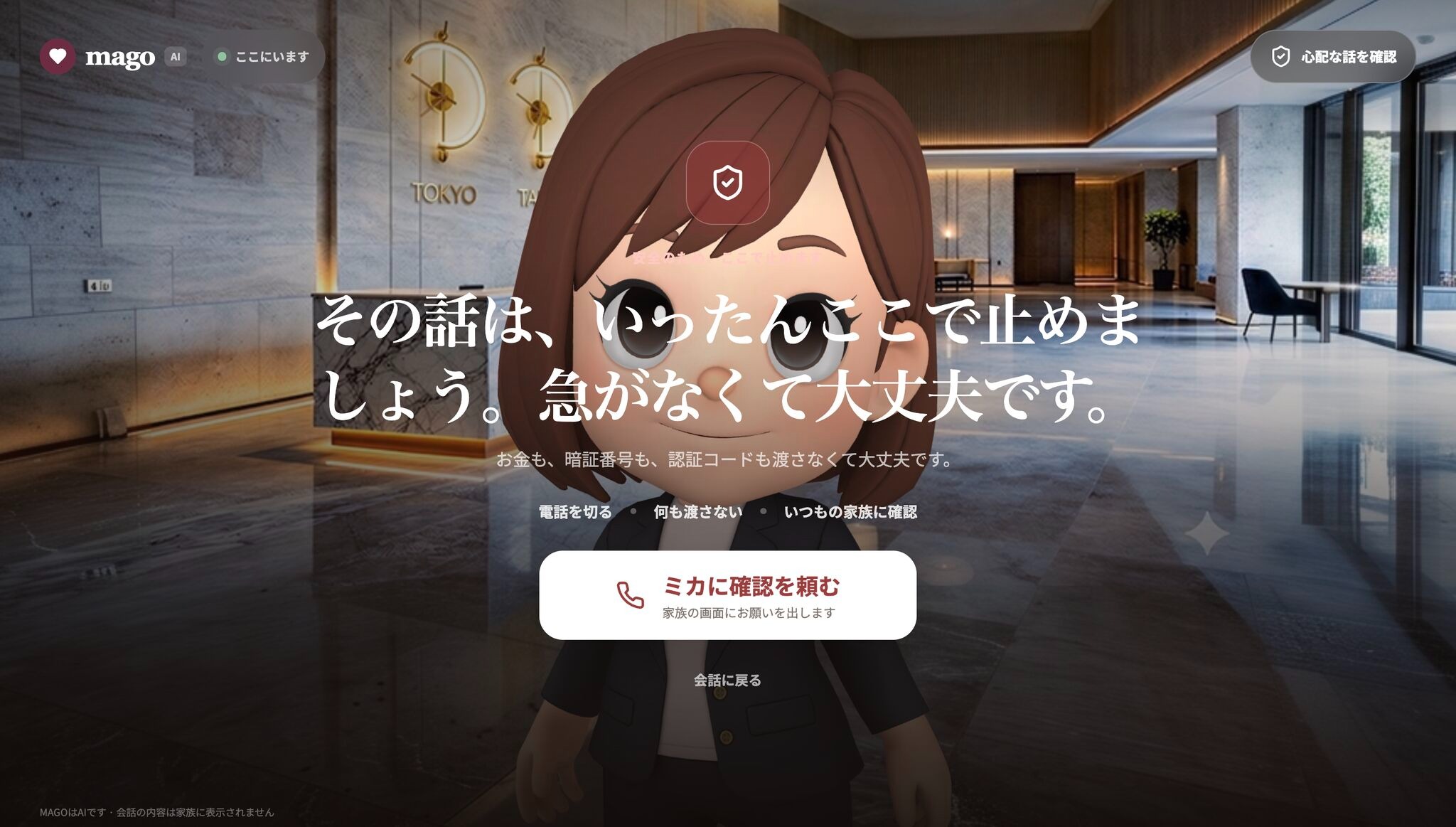
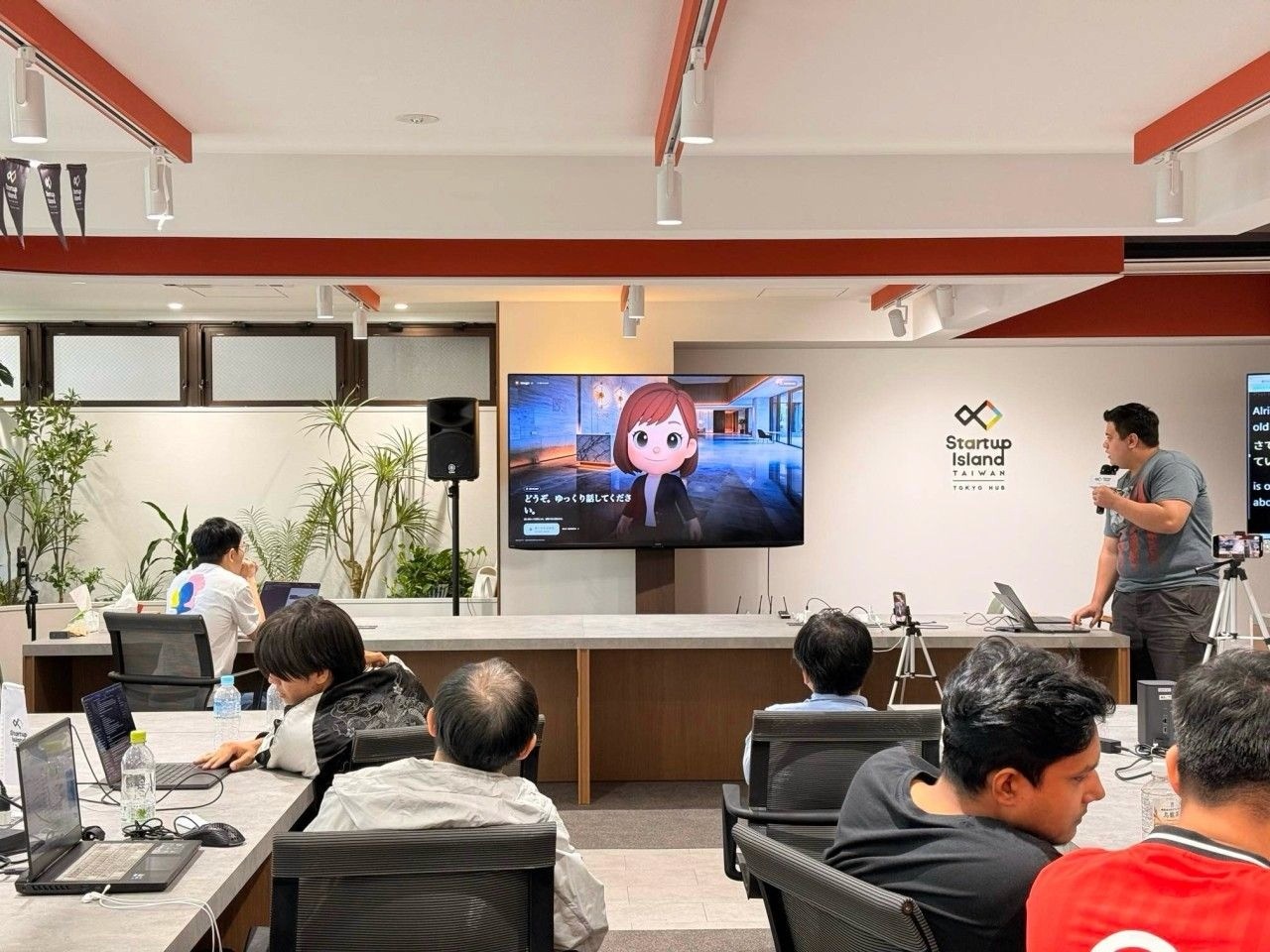
His inspiration was personal: his grandmother dislikes menus, passwords, and unfamiliar technology. But she understands a face—and the experience of someone looking at her, listening, and responding.
Making the Face the Interface
Even conversational software can leave someone wondering: Is it listening? Is it thinking? Is it my turn to speak?
MAGO used Perxona’s avatar to give the conversation a visible rhythm and provide someone the older adult could address.
The idea is straightforward: a familiar conversational interface could make AI easier to use for someone who struggles with conventional software. Testing with older adults would establish whether that translates into a more accessible experience.
Connecting to Family Support
MAGO also explored a limited safety net for possible fraud. The prototype was designed to consider who is asking for money, who would receive it, and whether a request involves urgency, secrecy, or possible impersonation.
When a situation appears dangerous, MAGO is designed to encourage the older adult to pause and offer a trusted family contact. The family would receive a safety signal and a suggested next action, without receiving the private conversation.
The prototype brings together a clear set of priorities: accessible conversation, privacy, and a path to human support.
Second Place: AI Avatars for Sales Training and Negotiation
Sarthak Saklani built a sales-training simulation focused on reading the room.
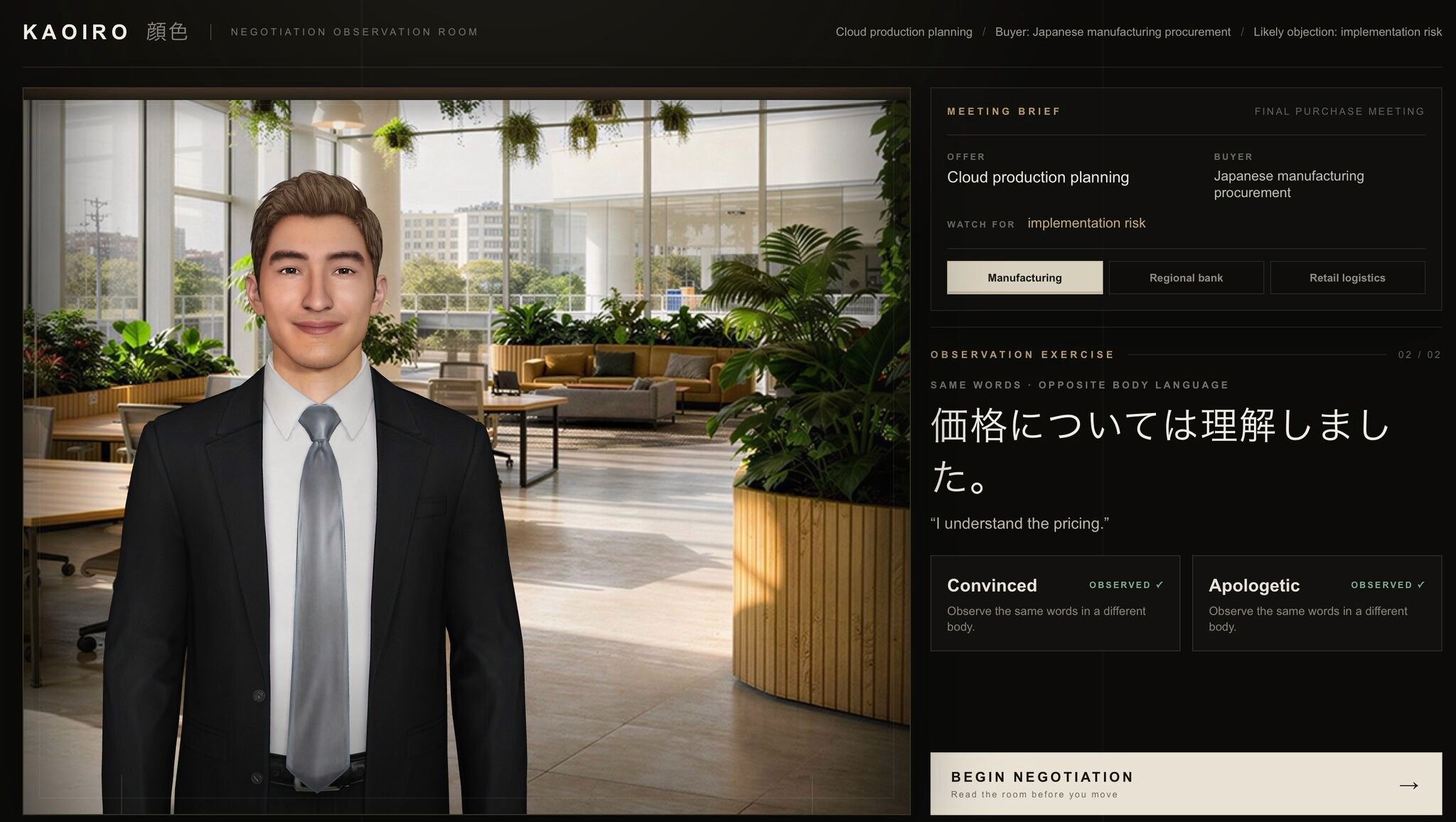
His project explored high-context business communication, particularly in Japanese negotiation settings, where polite or ambiguous language can leave important meaning unstated.
The AI-controlled avatar might sound encouraging while its hesitation, posture, or body language suggests reluctance. Participants choose how to respond:
Push: advance the negotiation.
Probe: ask questions to understand the hesitation.
Retreat: step back.
Read the situation correctly, and the negotiation progresses. Misread it too many times, and the deal falls through.
Practising Nonverbal Communication Through AI Roleplay
The avatar carries information essential to the task. Participants must notice its behavior and decide how to respond.
This creates an opportunity to practise asking better questions when spoken language and nonverbal cues seem inconsistent. Real body language varies between people and contexts, so further development should preserve that ambiguity rather than assign every gesture a fixed meaning.
The MVP points toward applications in sales training, onboarding, and rehearsing difficult business conversations.
Third Place: Mika Responds to Movement and Everyday Context
Abhishek Kumar built Mika, an AI companion for everyday moments that explores another question: what if an avatar responded to how you move?
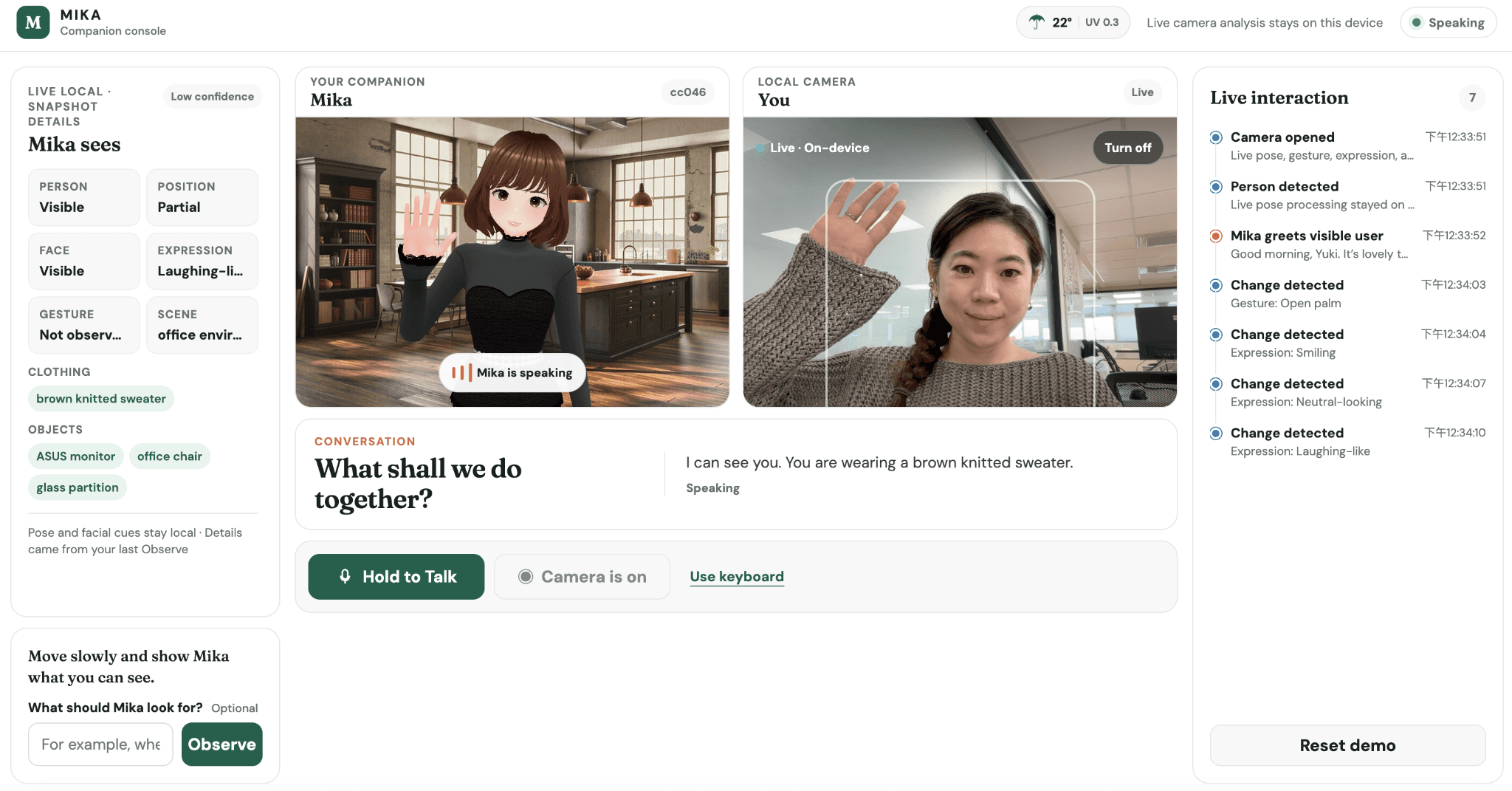
When the user enables the camera, Mika uses visual input to notice posture, gestures, facial expressions, and surroundings. It can respond to what it observes and move along with the user.
The demo shows a simple example: a user raises an open hand, and Mika raises a hand too. The interaction gives movement a role alongside speech and text.
Body Language Works Both Ways
Mika extends the Behavior AI idea into a two-way exchange. An avatar can express itself through movement while also responding to the user’s visible actions.
That opens up a different kind of companionship: someone can wave, move, or share their surroundings as part of the interaction.
Abhishek also built user control into the experience. Mika’s real-time camera analysis runs on the user’s device, and the camera and microphone activate only when the user chooses. The interface makes the camera’s state visible and provides a clear way to turn it off.
When Should You Build With an AI Avatar?
Ask: if you removed the avatar, what would the user lose?
For MAGO, it is a familiar way to address and follow a conversation. For Sarthak’s simulator, it is the opportunity to practise interpreting nonverbal cues. For Mika, it is a visible partner that can respond through movement.
These are early prototypes, with their impact still to be tested. But each gives the avatar a specific job and offers a clear direction for further development.
Congratulations to Chris Takahashi, Sarthak Saklani, and Abhishek Kumar, and thank you to all 14 teams who built and demoed at Hackvatar.
Their projects show why we’re building Perxona: to help people participate in conversations and communicate beyond words.
