Measuring the Bottom Line: How to Calculate the ROI of Digital Avatars for Hospitality
In the fast-paced world of 2026, "innovation" is no longer enough to win a budget. For hospitality executives and digital transformation leads, every piece of technology must prove its worth in hard currency. While the "wow factor" of an AI avatar is undeniable, the real question is: What is the actual return on investment?
Implementing a digital avatar isn't just about modernizing your brand; it's about deploying a high-performance brand asset across your website, lobby, and mobile touchpoints.
Here is how you can calculate the tangible ROI of bringing a digital avatar into your business operation.
1. The Conversion Engine: Turning Browsers into Bookers
Most websites lose potential customers because the "Self-Service" model is actually "No-Service." When a user has a question about a room's view or a specific dietary policy, they often leave rather than hunt through an FAQ.
The Avatar Impact:
An AI avatar acts as a proactive concierge. Instead of a static "Book Now" button, the avatar greets the user, answers questions in real-time, and guides them through the funnel.
Metric to Track: Conversion Rate Optimization (CRO).
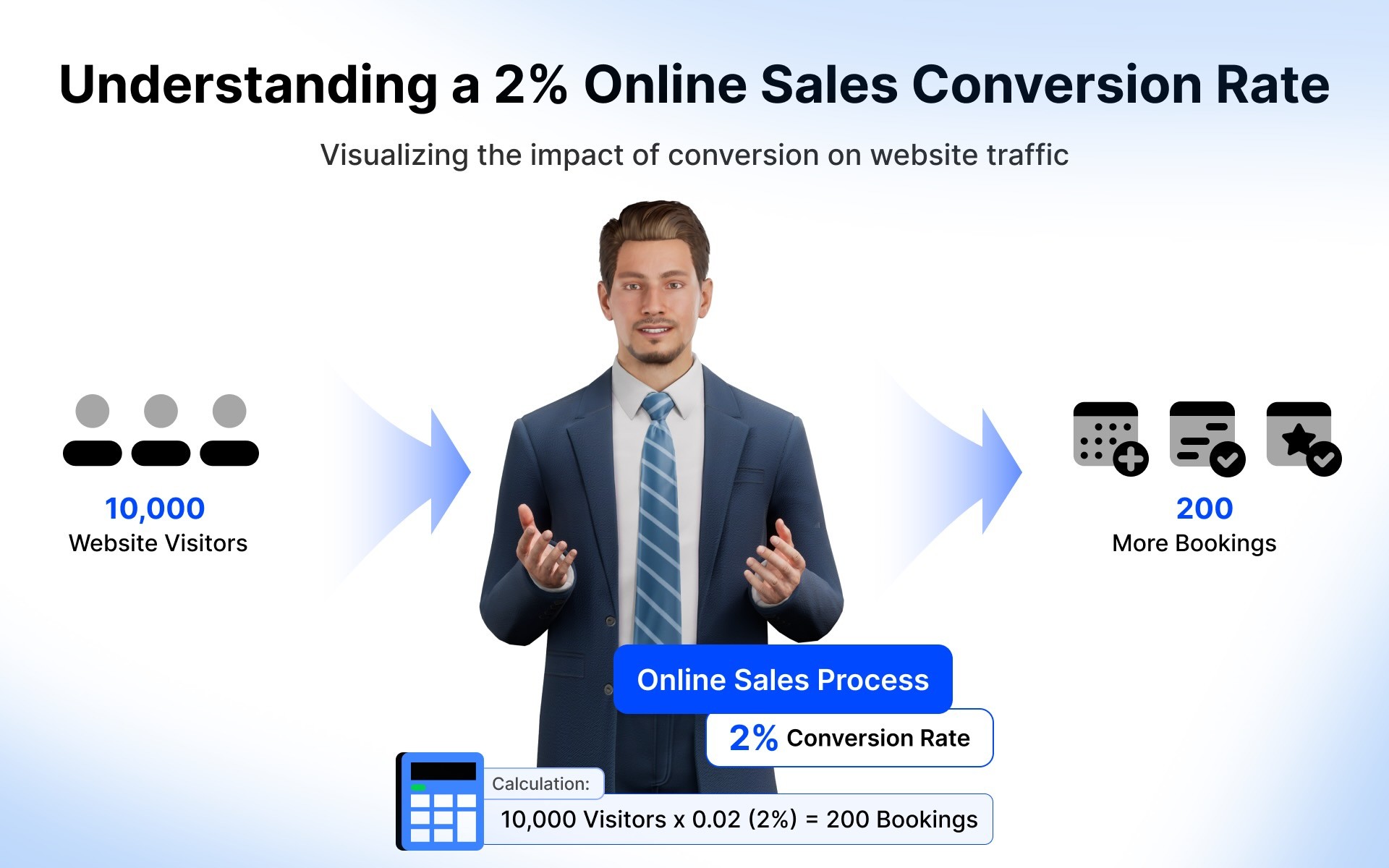
The Math: If your site has 10,000 monthly visitors and a 2% conversion rate, you get 200 bookings. A modest 20% lift from an avatar interaction moves that to 240 bookings.
2. Slashing Cart Abandonment at the Finish Line
In the travel and hospitality industry, cart abandonment rates can hover around 80% or higher. People get "cold feet" right at the payment screen.
The Avatar Impact:
Imagine a traveler hesitating at the checkout. An ai avatar appears—not as a pop-up, but as a friendly face—and says: "I see you're looking at the Deluxe Suite for August. Did you know that includes a complimentary spa credit if you book in the next ten minutes?" * The ROI Factor: By addressing hesitation at the moment of friction, avatars can recover 15–25% of abandoned carts that would otherwise be lost to competitors.
3. The "Silent Upsell": Increasing Average Order Value (AOV)
Human staff often forget to upsell when they are busy or stressed. Digital avatars never do. They are programmed to recognize the perfect moment to suggest an upgrade.
The ROI Variables:
Cross-selling: Suggesting airport transfers or local tours.
Upselling: Offering a room upgrade or a late checkout.
Predictive Analytics: Avatars can suggest add-ons based on the traveler’s profile (e.g., suggesting a "Kids Club" pass to a family).
4. The Multilingual Multiplier
Language barriers are a massive "hidden" cost. If a Japanese traveler can't understand your booking process, they simply won't book. Hiring a 24/7 multilingual staff is financially impossible for most boutique brands.

The Avatar Impact:
A single Perxona.ai avatar can speak dozens of languages fluently, with cultural nuance and appropriate non-verbal cues. This opens your business to entire global markets without adding a single cent to your payroll for translators.
Note: Converting just 5% more international leads because you finally speak their language can pay for the entire AI implementation in a single quarter.
5. The "Wow" Factor as an Asset: Elevating Brand Value Through Innovation
Calculating ROI isn't just about spreadsheets and efficiency gains. There is also Intangible ROI: the elevation of your brand perception, the creation of word-of-mouth buzz, and the ability to command premium pricing because you offer an experience competitors cannot match.
In 2026, customers expect technology to be seamless. When you move beyond a standard touchscreen and offer an interactive digital human, you signal to your market that your brand is a leader in innovation and guest experience.
The Case Study: The AI Caddie on the 8th Hole
Consider the golf industry, a sector of hospitality highly focused on premium service.
Imagine a player arriving at a high-end course for the first time. Instead of a static GPS map on their cart, they are greeted by a large, Tesla-style display featuring the club's custom AI avatar—their personal digital caddie for the round.

As they approach the tricky 8th hole, the avatar automatically activates:
"Welcome to the 8th, David. This dogleg left is deceptive. There's a hidden bunker 230 yards out on the left side that catches a lot of first-timers. With the current wind coming from the North at 5 mph, I suggest aiming down the right-center of the fairway with a 3-wood to set up an easy approach shot."
The Brand ROI of this Interaction:
Premium Positioning: This isn't just a golf cart; it's a personalized experience. This justifies higher green fees and membership dues.
Viral Marketing: This is exactly the type of "cool factor" experience guests take photos of and share on social media. It’s free, authentic advertising that positions your venue as a must-visit destination.
Increased Loyalty: Once a player experiences a course with a helpful, proactive AI caddie, going back to a "dumb cart" at a competing course feels like a downgrade.
Whether it's an avatar in a hotel lobby recognizing a returning guest, or a digital sommelier on an iPad at a high-end restaurant, this technology creates a "stickiness" to your brand that traditional service models struggle to replicate at scale.
The Digital Avatar ROI Calculator: Estimate Your Gains
We’ve discussed the "How" and the "Why," but now it’s time for the "How Much."
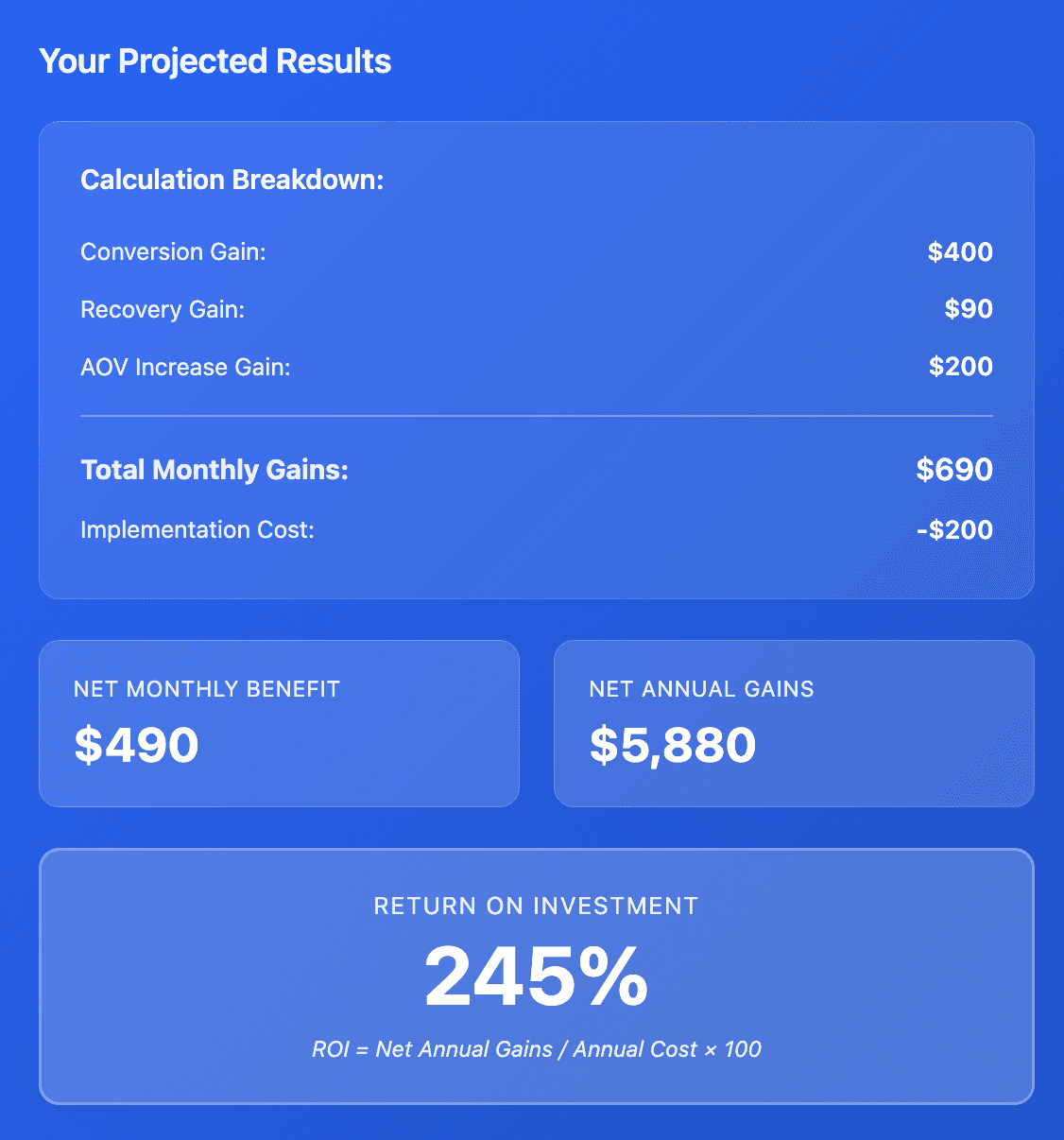
To help you move from theory to a concrete business case, we prepared this example that looks at the potential gains a real business can experience from implementing a digital avatar solution.
Our example, analyzes a small e-commerce business:
Monthly Web Sales: $10,000
Monthly Web Visitors: 5,000
Monthly Avatar Cost: $200
We expect the following base case improvement with an effective avatar implementation:
Direct Conversion Lift: How many "browsers" become "bookers" or "buyers" when greeted by a proactive guide? We will assume 4% in our example.
Booking Recovery: The value of capturing the % of travelers who typically abandon their carts. We are assuming a lift of 3%.
AOV (Average Order Value) Growth: The impact of consistent, non-intrusive upselling. We assumed 2% improvement.
Here are the results:
What This Means:
The calculation shows that by just a small improvement in direct conversion, cart recovery, and average order value, a small business is able to improve their bottom line by almost $6,000 dollars and get a return on investment of 245%.
From "Expense" to "Asset"
In 2026, the businesses that thrive won't be the ones with the most complex websites, but the ones with the most accessible ones. A digital avatar moves your website from a static brochure to a dynamic, high-converting storefront.
When you implement an avatar in your physical lobby or on your digital homepage, you aren't just adding a feature—you're hiring a 24/7, multilingual, top-performing salesperson who never gets tired and knows every detail of your brand.
Build Your Business Case: Estimate Your Potential ROI
Use the interactive calculator below to apply these concepts to your own operations and estimate the concrete impact on your bottom line.
