5 Ways AI Avatars Will Transform Travel & Hospitality in 2026
How AI for travel industry 2026 is evolving beyond chatbots to create genuinely human experiences
You've just landed in Tokyo after a 14-hour flight. It's 11 PM. You're exhausted, can't remember your hotel confirmation number, and the front desk staff are sure to be dealing with a line of equally tired travelers. You pull out your phone, and within seconds, an AI avatar greets you in your native language, confirms your reservation, offers to upgrade your room, and suggests a quiet late-night ramen spot nearby, all while you're still in the taxi.
This isn't science fiction. It's happening now.
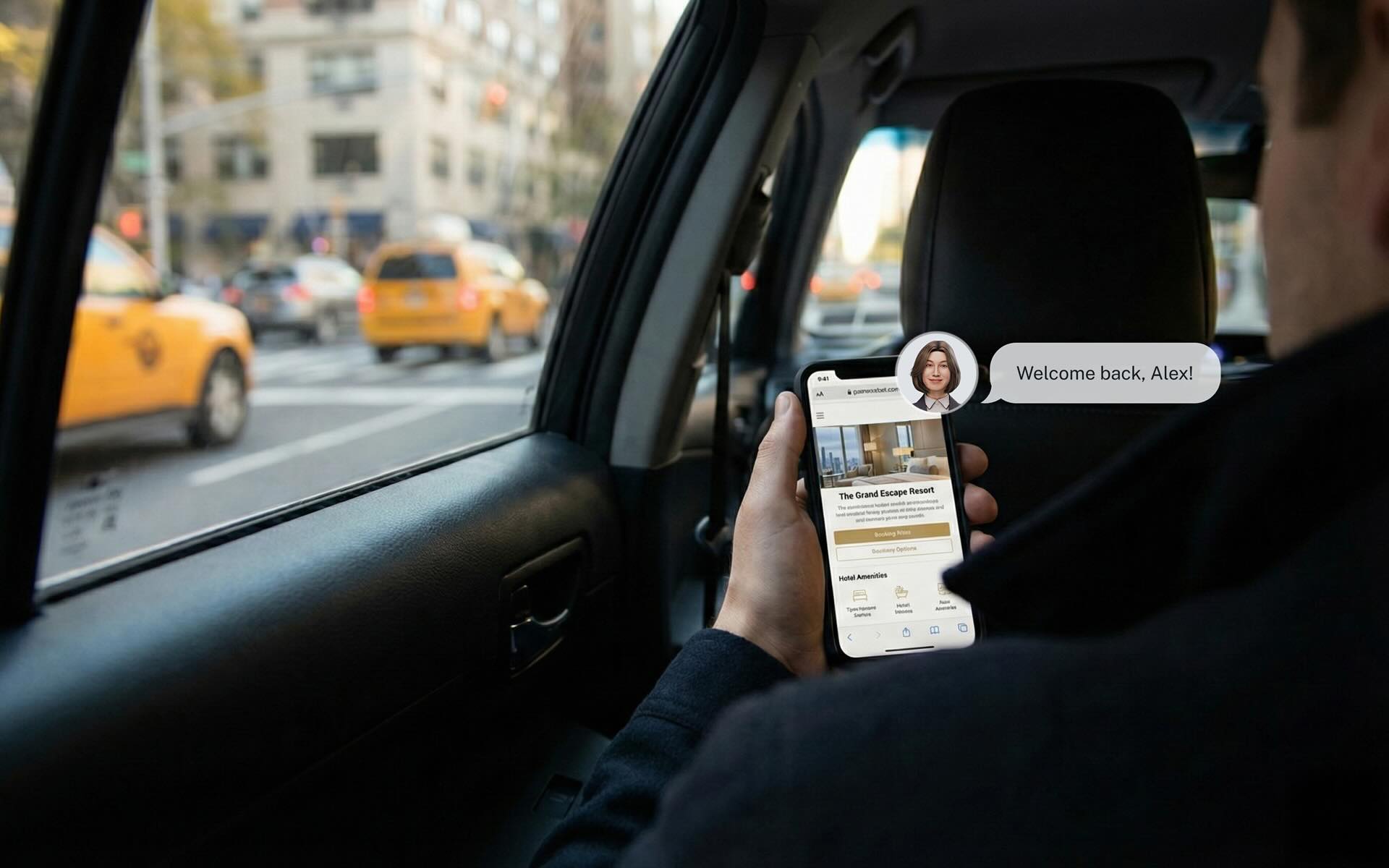
As we move into 2026, AI for travel industry applications is shifting from basic automation to something far more sophisticated: AI avatars that don't just process requests, but actually connect with travelers on a human level. While recent travel trends point toward "quietcations," ultra-personalized experiences, and a growing desire for meaningful connection over transactional service, there's a problem: the hospitality industry is facing its worst labor shortage in decades.
AI avatars are emerging as the solution that bridges this gap, not by replacing human warmth, but by extending it.
Here are five ways AI avatars will transform travel and hospitality in 2026.
1. 24/7 Multilingual Concierge Services That Actually Feel Personal
The Problem: With road trips surging and off-grid destinations gaining popularity, travelers are exploring beyond traditional tourist hotspots. But smaller hotels, boutique properties, and attractions in lesser-visited regions often lack the resources to provide round-the-clock, multilingual support. When you're traveling in Brandenburg, Germany or Toledo, Spain, two of 2026's trending off-grid destinations, language barriers and limited staff hours can turn what should be an adventure into a frustrating experience.
How AI Avatars Solve It: Unlike text-based chatbots that feel robotic and transactional, AI avatars bring personality, expression, and emotion to every interaction. They can greet guests in any language, provide local recommendations, handle booking modifications, and answer complex questions about amenities, all while maintaining the warmth and personality of your brand.
Real-World Application: Imagine a boutique hotel in Northumberland (one of the UK's emerging destinations) where an AI avatar serves as a virtual concierge. A Japanese guest can ask about hiking trails at 2 AM in their native language. A Spanish family can get dinner reservations and learn about local festivals. A solo traveler from Brazil can get safety tips and transportation options. All of this happens instantly, with genuine personality and cultural nuance—no human staff required to be awake at odd hours.
2. Hyper-Personalized Travel Planning Without the Decision Fatigue
The Problem: According to Hilton's 2026 Trends Report, travelers are increasingly overwhelmed by choice. This "decision fatigue" has led to the rise of mystery travel options and curated escapes where guests don't make any decisions at all. At the same time, travelers want ultra-personalized experiences tailored to their specific life stage, interests, and needs—whether that's a divorce retreat, a menopause wellness trip, or a racket sport holiday.
The paradox? People want personalization but hate having to make endless micro-decisions to get it.
How AI Avatars Solve It: AI avatars can act as your personal travel advisor, learning your preferences, understanding your context, and curating experiences that match your needs without requiring you to scroll through hundreds of options. Unlike generative AI tools that simply aggregate information, AI avatars with personality can have conversations that feel more like talking to a trusted friend than filling out a form.
Real-World Application: A wellness resort in Mendoza, Argentina uses an AI avatar as the first touchpoint for potential guests. Instead of asking visitors to navigate a complex booking form, the avatar has a conversation: "What brings you here? Are you looking to decompress from work stress, or are you celebrating something special?" Based on the responses, it curates a personalized itinerary, spa treatments, wine tastings, outdoor activities, and presents it conversationally, allowing guests to adjust without feeling overwhelmed by options.
3. Bringing Characters and Brand Stories to Life
The Problem: The travel industry is shifting toward culture over hedonism, with literary travel and "set-jetting" (travel inspired by film and TV) on the rise. Hotels are creating themed experiences, from Harry Potter-inspired stays to poolside libraries. Theme parks in Japan are looking for ways to enhance visitor experiences with character-based interactions. But how do you scale beloved characters and brand personalities across thousands of daily interactions?
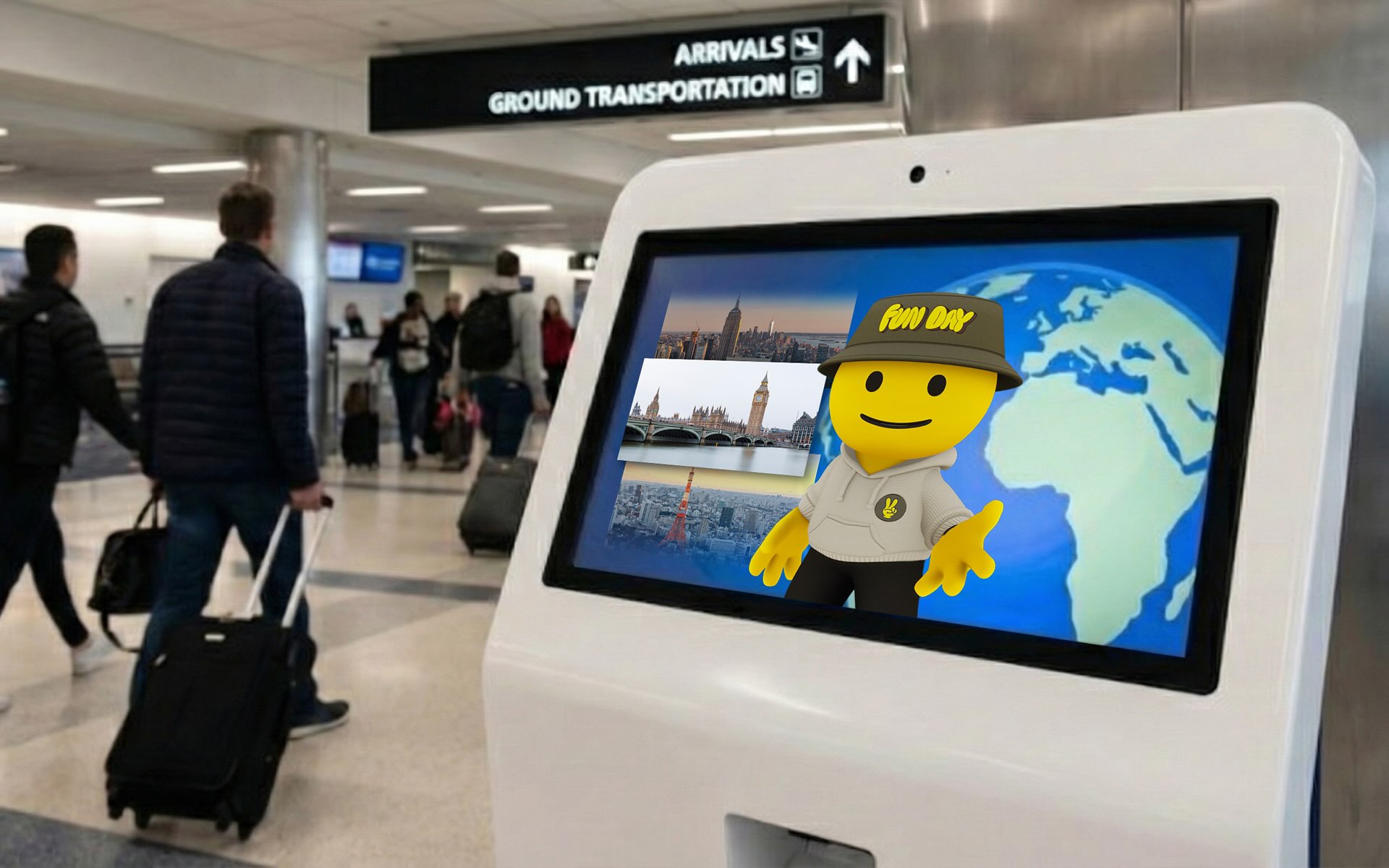
How AI Avatars Solve It: AI avatars can embody brand characters, whether that's a hotel's signature personality, a theme park mascot, or even a historical figure tied to a destination. Through our work with renowned Taiwanese artist BOUNCE, Perxona demonstrated how creative IPs can become interactive AI avatars with authentic personality, distinctive voice, and real emotional expression.
Real-World Application: At Leisure Japan 2025 in Tokyo, we showcased how AI avatars could transform attractions and entertainment venues. Imagine a theme park where beloved characters don't just appear in photo ops, they interact with visitors throughout the day. A family from France can have a conversation in French with the park's mascot about ride wait times and dining options. A group of teenagers can get personalized recommendations for attractions based on their interests. The character's personality remains consistent, the interactions feel magical, and no human performer needs to be in costume for 12 hours straight.
As one visitor to our booth noted: "You can see the lightbulb moment when people realize they might not need traditional website navigation anymore, just a conversation with someone who understands what they're looking for."
4. Addressing the Labor Shortage Crisis in Hospitality
The Problem: The hospitality industry is facing a structural labor crisis. According to recent trend reports, the shortage is particularly acute in roles requiring multilingual skills. We've heard this directly from customers: a hospitality company told us they have one star multilingual employee who's buried under repetitive questions every day. They're burning her out, and they know it.
How AI Avatars Solve It: AI avatars function as your "second employee", handling the repetitive, high-volume interactions that drain human staff, while freeing your team to focus on complex, high-value guest interactions that truly require a human touch. Unlike traditional automation that feels cold and transactional, AI avatars maintain warmth and personality in every interaction.
Real-World Application: A hotel chain implements AI avatars as virtual front desk assistants. When guests have standard questions—check-in procedures, WiFi passwords, breakfast hours, local transportation—the AI avatar handles it instantly, in any language, 24/7. When a guest has a complex issue—a billing dispute, a special celebration, a service complaint, the AI avatar seamlessly escalates to a human staff member with full context of the conversation.
The result? Human staff aren't overwhelmed by basic questions. They can focus on creating memorable, personalized experiences. And guests get immediate help whenever they need it, without feeling like they're talking to a robot.
This is especially critical as road trips surge in popularity and travelers venture to smaller properties in less-touristed regions—places that simply can't afford to staff round-the-clock multilingual support teams.
5. Building Trust in an Era of AI Skepticism
The Problem: As generative AI becomes more prevalent in travel planning and booking, travelers are becoming more skeptical. Sustainability experts warn that algorithmic recommendations fuel overtourism. AI-powered scams are on the rise. Many travelers feel that AI removes the human element they're looking for, especially as trends like "quietcations" and "hushpitality" emphasize the desire for genuine, restorative human connection.
How AI Avatars Solve It: The key insight: the best AI for travel industry 2026 isn't about removing humans from the equation, it's about extending human warmth and personality at scale. AI avatars with genuine expression, voice, and emotion create a middle ground between fully automated systems and traditional human service.
When someone interacts with an AI avatar that expresses emotion, uses natural body language, and communicates with personality, they're not just getting efficiency, they're getting connection. The technology becomes less about invisible automation and more about creating touchpoints that feel genuinely human.
Real-World Application: At Tainan City's Industrial DX Expo, government officials experienced how AI avatars could transform public services. For smart cities looking to serve diverse, multilingual populations while maintaining consistent service quality, AI avatars offered a solution that felt warm rather than automated.
As Don Norman, the influential design researcher, notes: "The real problem with the interface is that it is an interface. Interfaces get in the way." AI avatars remove friction without removing personality, they make the technology feel invisible while keeping the humanity intact.
The Future of AI for Travel Industry 2026: Conversation Over Navigation
The "Zero UI" movement advocates for removing interfaces altogether, using haptics, voice, and gestures to create completely screenless interactions. While this works for some applications, travel and hospitality require something different. Travelers don't just want their problems solved efficiently. They want to feel heard, understood, and cared for.
AI avatars represent a third way: technology that's responsive and smart, but still feels like a conversation with another person.
In demos with potential customers, there's a consistent reaction. When travelers interact with an AI avatar that brings up product information, shows images, and answers questions through natural conversation, something clicks. They realize: maybe they won't need traditional website navigation anymore. No more hunting through menus. No more clicking through pages. Just a conversation with someone who understands what they're looking for and shows exactly what they need.
The interface doesn't disappear completely. But it stops getting in the way.
Ready to Transform Your Guest Experience?
At Perxona, we help travel and hospitality businesses figure out how to implement AI avatars that extend human warmth, not replace it. We start by understanding what's actually broken in your operation, then work together to build solutions that fit your specific needs.
Want to see what this looks like in action? [Book a demo] or reach out to learn how AI avatars could work for your business.
Because in 2026, the best travel experiences won't be the ones with the most technology, they'll be the ones where technology helps create genuine human connection.
